
I have spent years examining how online casinos handle personal information, and I can guarantee you that a privacy policy is much more than a legal checkbox. It is the most vital document you will come across on any gambling platform, including Slotoro Casino. When you register an account, submit a deposit, or even just browse the games lobby, you generate a trail of data that demands protection. A well-written privacy policy explains exactly what happens to that data, who sees it, and how long it stays on file. I always recommend players in Bulgaria that going through this document before you play is not optional; it is the foundation of a safe gaming experience. Without it, you are basically handing over your identity without knowing the rules of engagement.
The Reason Bulgarian Players Ought to Scrutinise Data Protection Policies
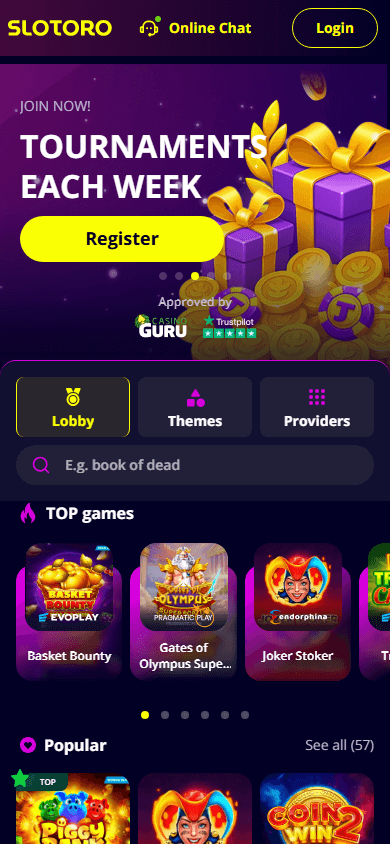
I understand that many Bulgarian players overlook the privacy policy because it seems dense and boring, but that is a dangerous habit. Bulgaria functions under strict EU data protection laws, and local players hold rights that casinos must honour. When I deposit Bulgarian lev through a local payment method, I need to be certain that my financial data is not being routed through insecure third parties. I also need to know if the casino shares my activity with the National Revenue Agency for tax compliance, because that brings real-world consequences. Slotoro Casino, for instance, functions in a regulated environment where such disclosures might be mandatory. I always review whether the policy mentions cross-border data transfers, as many casino servers are located outside the EU. Without a clear transfer mechanism like Standard Contractual Clauses, your data could land in a jurisdiction with weaker protections, and that is a risk I am never willing to take.
Ways to Check a Casino’s Privacy Commitment Without Assistance
I rarely rely exclusively on the written policy. I double-check the claims through independent verification methods. I look for the padlock icon and a valid SSL certificate on each page where I enter personal data; this is a basic security layer that secures information in transit. Then I search for the casino’s registration with the Bulgarian National Revenue Agency or the relevant EU regulatory body, because a legitimate operator will present its licence number publicly. I also check the responsiveness of the Data Protection Officer. Sending a simple email asking about data retention should yield a coherent reply within a week. If the response is evasive or never arrives, I understand the privacy policy is just window dressing. I examine third-party audit seals like eCOGRA or iTech Labs, which often include data security assessments in their certification scope. I read player forums specific to Bulgaria to see if anyone has reported unexplained spam or data leaks linked to the casino.
- Check SSL encryption and review the certificate issuer for any warnings.
- Cross-reference the licence number with the official public register of the issuing authority.
- File a test data subject access request and assess response time and completeness.
- Search for independent security certifications that validate the policy’s technical promises.
The Core Components of a Robust Privacy Policy
In my time, I have created a checklist of elements that every casino privacy policy must have to gain my trust. The document needs a clear data controller identification, including the company name, registration number, and physical address. I am unable to take a policy seriously if the operator operates behind a shell entity. The policy must outline every purpose for data processing, from account maintenance to anti-fraud checks and marketing. I search for a detailed retention schedule. Holding my passport copy indefinitely after I close my account is not acceptable. The policy must explain cookie usage and tracking technologies separately. I require seeing a dedicated section for automated decision-making and profiling, because many casinos use algorithms to evaluate playing behaviour and set deposit limits. If these components are missing, I walk away.
- Clear data controller identification with full corporate details and supervisory authority contact.
- Specific breakdown of processing purposes, legal bases, and legitimate interests pursued.
- Accurate data retention periods for each category, tied to legal obligations or business necessity.
- Comprehensive cookie policy covering session, persistent, and third-party tracking mechanisms.
- Transparent profiling logic and the right to opt out of automated decisions that produce legal effects.
Exercising Your Data Protection Rights in Bulgaria
As a resident of Bulgaria, I have a robust set of rights under the GDPR, and I continually test whether a casino like Slotoro Casino makes those rights straightforward to exercise. The right of access allows me to seek a copy of all personal data the casino stores about me, typically within 30 days and without charge. The right to rectification means I can fix inaccurate information, such as a misspelled surname, without jumping through hoops. I also value the right to erasure, frequently called the right to be forgotten, which allows me to insist on deletion of my data once it is ceases to be necessary for legal or contractual purposes. Portability is an additional tool I use; I can request my data in a machine-readable format to move it to another service. I pay close attention to the right to object to direct marketing and profiling. The policy must provide a clear email address or a specialized privacy dashboard for filing these requests, and I look forward to a confirmation of receipt within a few days.
How Slotoro Casino Collects and Applies Your Information
When I examine how Slotoro Casino handles data, I begin with the registration flow. The platform obtains your name, date of birth, email, and residential address to confirm your identity and satisfy anti-money laundering regulations. I recognize that this is not optional; the law requires it. Beyond that, the casino records your transaction history, game sessions, and device information to safeguard your account from unauthorised access. I have seen how this technical data helps detect suspicious logins from unfamiliar locations. Slotoro Casino also uses your contact details to dispatch service-related messages, such as withdrawal confirmations and responsible gaming alerts. Promotional emails are a separate matter, and I always check that the policy offers a clear opt-in mechanism rather than a pre-ticked box. Your playing patterns may be analysed to tailor game recommendations, but only if you have given explicit consent where required.
Frequently Asked Questions About Casino Privacy
May a casino transfer my data to Bulgarian tax authorities?
Yes, and this is usually a statutory duty rather than a decision. Regulated casinos operating in Bulgaria may be required to report player winnings to the National Revenue Agency under local tax legislation. I make it a habit to examine the privacy policy for a provision on legal disclosures, which ought to explicitly state adherence to tax laws, anti-money laundering mandates, and judicial orders. Slotoro Казино Casino, similar to any compliant operator, will execute such transfers based on the lawful foundation of a legal requirement. This indicates your approval is unnecessary for these exact disclosures, but the policy has to advise you that they happen. I suggest retaining your own documentation of winnings and withdrawals so that your tax submissions correspond with the data the casino reports, averting inconsistencies that might prompt an audit.
What becomes of my documents when I shut down my account?
Closing an account does not instantly wipe all your data from the casino’s servers. I clarify this often because it surprises many players. щракнете за да прочетете повече Anti-money laundering laws oblige casinos to retain identification documents and transaction records for a minimum period, usually five years after the business relationship ends. The privacy policy ought to specify this retention period clearly. After that statutory period elapses, the casino must reliably delete or anonymise your data. I invariably request a written confirmation of the deletion timeline when I close an account. If the policy states indefinite retention for “analytical purposes,” I push back immediately, because anonymisation must be permanent and authentic, not just a pseudonymisation that can be inverted later.
Would the affiliate programme impact my privacy if I fail to use an affiliate link?
Absolutely not, if you go to Slotoro Casino directly by typing the URL into your browser, no affiliate tracking cookie is placed on your device. The affiliate programme only activates when you select a tagged link from an external website. Even then, as I detailed earlier, your personal identity is not revealed with the affiliate. I always recommend players to delete their browser cookies periodically and to utilize privacy-focused browser extensions if they wish to limit tracking. The privacy policy should verify that direct visitors are not profiled for affiliate attribution, and I seek that explicit statement to be sure there is no behind-the-scenes data stitching that connects your session to an unknown partner.
How do I file a complaint if I feel my privacy rights have been violated?
I constantly remind Bulgarian players that they have a straight path to an authorized authority. If Slotoro Casino fails to resolve your data protection concern within one month, you can lodge a complaint with the Commission for Personal Data Protection of the Republic of Bulgaria. The privacy policy should provide the contact details for this supervisory body, along with the casino’s own Data Protection Officer email. I suggest documenting every interaction, saving email threads, and noting dates. The Commission has the authority to investigate, issue fines, and order corrective measures. This external oversight is your primary safeguard, and a casino that genuinely respects privacy will not hinder you from exercising this right.
Affiliate Collaborations and Data Sharing Limits
I strive to be completely transparent about how affiliate schemes affect your privacy. Slotoro Casino partners with marketing affiliates who advertise the brand, but that does not imply your personal data is passed to them freely. In my assessment, the privacy policy needs to draw a hard line between the casino’s internal data processing and what affiliates can obtain. Typically, an affiliate receives aggregated, anonymised metrics about traffic and conversion rates, not individual player profiles. If you followed an affiliate link to reach Slotoro Casino, a tracking cookie might be placed on your device to attribute your registration, but that cookie does not reveal your name or payment data. I always check that the policy prevents affiliates from using your information for their own marketing unless you have independently subscribed to their services. This division is critical for maintaining trust.
- Affiliates get only anonymised performance statistics, never raw personal data.
- Tracking cookies employed for attribution expire within a defined period and do not leak identity.
- The casino contractually obligates affiliates to GDPR standards and audits their compliance.
- You retain the right to ask for a list of all third parties who manage your data on the casino’s behalf.
What Exactly Is a Casino Privacy Policy?
I characterize a casino privacy policy as a binding legal public statement that discloses how an operator gathers, retains, handles, and discloses user information. This is not a unclear mission statement or a marketing page. It is a technical document that must satisfy the General Data Protection Regulation (GDPR) and Bulgaria’s Personal Data Protection Act. When I assess a policy for a brand like Slotoro Casino, I search for exact language about the kinds of data collected: personally identifiable information such as your full name, address, and payment details, as well as technical data like your IP address and device fingerprint. The policy must also clarify the legal basis for processing each category. Consent, contractual necessity, and legitimate interest are the three pillars I expect to see explicitly named. If a policy conceals behind ambiguous wording, I view it a red flag.